
Businesses today collect information faster than ever. But storing and using that information wisely requires the right setup. That’s where the conversation around big data vs data warehouse becomes important. Both help organizations make smarter decisions, but they work differently.
According to Statista, the total amount of data created globally is projected to reach 295 zettabytes by 2029. The difference between big data and data warehouse lies in how they handle volume, speed, structure, and purpose. This guide breaks down both concepts, compares their features, explains real-world use cases, and helps you decide which fits your business needs.
What is Big Data
Big data refers to extremely large sets of information that traditional tools can’t process easily. It includes data from sensors, social media, websites, machines, and more. Big data comes in three main types: structured, semi-structured, and unstructured. Volume, velocity, and variety define it. Big data systems handle information that arrives fast and changes constantly. They’re built to process massive streams without slowing down. These systems don’t require data to follow strict formats upfront. They focus on flexibility and speed over perfect organization.
What is Data Warehouse
A data warehouse is a centralized storage system designed for structured data. It collects information from multiple business sources like sales, customer records, and finance systems. Data warehouses organize information into tables, rows, and columns, using predefined schemas to ensure consistency. Implementing a well-defined data warehouse strategy helps organizations support reporting, analysis, and business intelligence effectively. Users run queries to track performance, compare trends, and measure KPIs. Data warehouses are optimized for read-heavy workloads, enabling teams to make informed decisions based on historical and current business data.
Big Data vs Data Warehouse: Key Differences
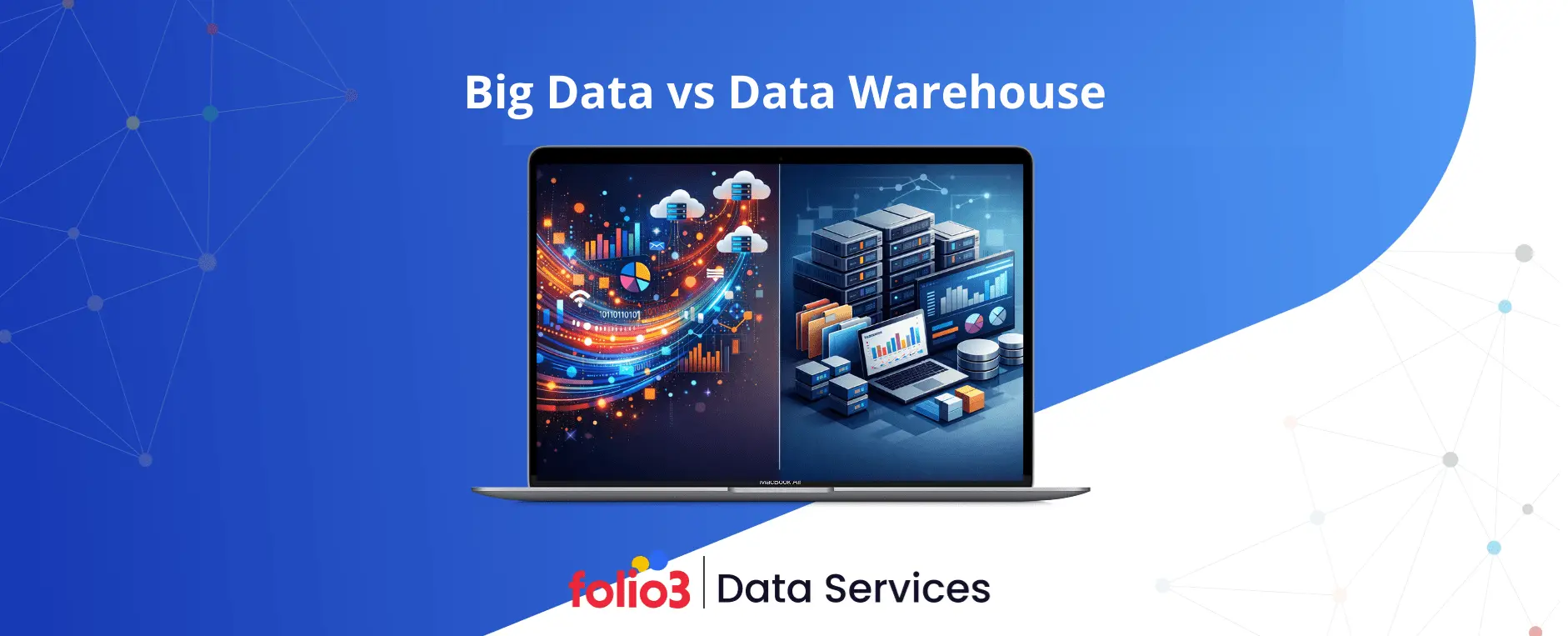
Understanding the difference between big data and data warehouse starts with comparing their core features. Each serves distinct purposes and operates under different technical principles.
| Feature | Big Data | Data Warehouse |
| Data Type | Structured, semi-structured, unstructured | Primarily structured |
| Data Volume | Petabytes to exabytes | Gigabytes to terabytes |
| Processing | Real-time and batch processing | Batch processing, optimized for queries |
| Schema | Schema-on-read | Schema-on-write |
| Performance | High throughput, distributed | High query performance, centralized |
| Use Case | Exploratory analytics, machine learning | Business intelligence, reporting |
| Cost | Can be high due to infrastructure | Moderate to high depending on scale |
| Tools | Hadoop, Spark, Kafka, Flink | Snowflake, Redshift, BigQuery, Teradata |
| Users | Data scientists, engineers | Business analysts, managers |
Big Data vs Data Warehouse: Use Cases
Choosing between big data and a data warehouse depends on what you’re trying to accomplish. Each excels in different scenarios based on data type, speed, and analytical goals.
Big Data Use Cases
Big data shines when dealing with high-speed, high-volume, and varied information. Successful big data implementation enables advanced analytics and real-time decision-making across industries.
1. Real-Time Fraud Detection
Financial institutions analyze transaction patterns instantly. Big data systems flag suspicious activity within milliseconds. This prevents losses and protects customers.
2. IoT Data Processing
Connected devices generate streams of sensor data. Big data platforms collect, process, and analyze this information at scale. Manufacturing and smart cities rely on this capability.
3. Predictive Maintenance
Equipment sensors send performance data continuously. Big data tools, combined with data analytics and visualization services, predict failures before they happen. This reduces downtime and saves costs.
4. Social Media Analytics
Brands monitor millions of posts, comments, and interactions daily. Big data captures sentiment, trends, and customer preferences. Marketing teams act on insights quickly.
5. Recommendation Engines
Streaming platforms and e-commerce sites analyze user behavior in real time. Big data powers personalized suggestions. This improves engagement and revenue.
6. Machine Learning Pipelines
Training models requires processing vast amounts of raw data. Big data frameworks handle feature engineering and model training efficiently. AI teams depend on this infrastructure.
Data Warehouse Use Cases
Data warehouses excel at structured reporting and historical analysis. They support decision-making with clean, consistent, and organized information, complementing broader big data strategies by providing reliable historical context.
1. Business Intelligence Dashboards
Executives need clear views of company performance. Data warehouses feed BI tools with accurate metrics. Teams track progress against goals.
2. Historical Reporting
Companies compare current results with past performance. Data warehouses store years of records in accessible formats. This supports trend analysis.
3. KPI Tracking
Sales, marketing, and operations teams monitor key performance indicators. Data warehouses provide reliable, up-to-date numbers, with real-time data warehousing ensuring immediate visibility into critical metrics.
4. Financial Analysis
Finance departments rely on precise data for budgeting and forecasting. Data warehouses integrate accounting systems with other sources. This ensures accuracy.
5. Sales and Marketing Analytics
Teams analyze customer journeys, campaign performance, and conversion rates. Data warehouses consolidate data from CRM, web analytics, and ad platforms. Insights drive strategy.
How Big Data Works with Data Warehousing
Big data and data warehouses don’t compete. They often work together to create powerful analytics systems. Organizations combine both to handle diverse data needs.
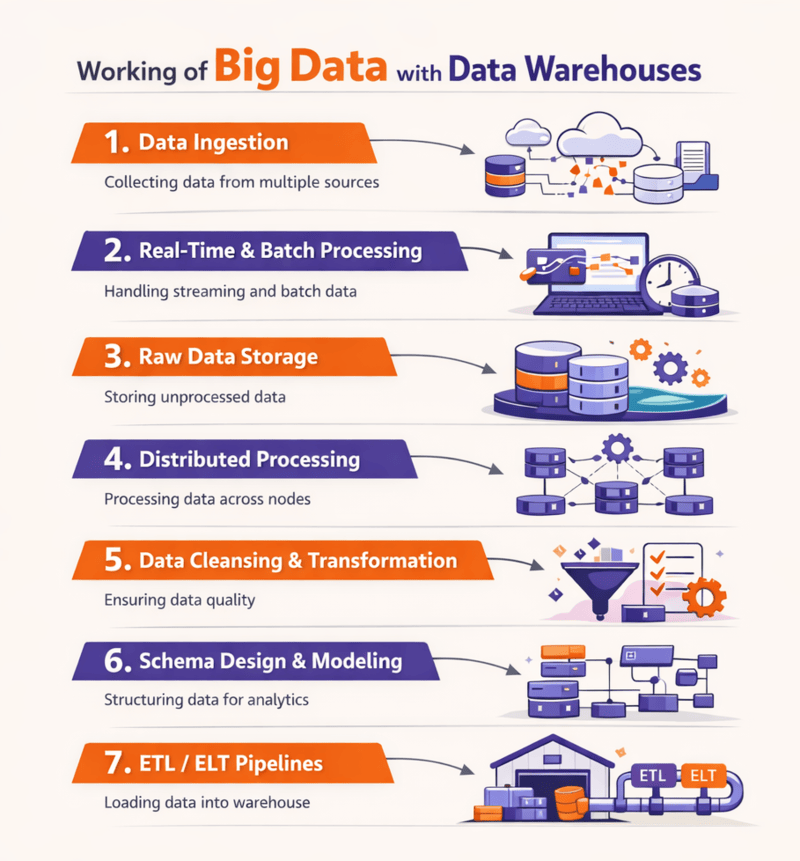
1. Data Ingestion from Multiple Sources
Big data systems pull information from databases, APIs, logs, sensors, and external feeds. A scalable big data pipeline supports high-speed ingestion without bottlenecks and creates a strong foundation for processing.
2. Real-Time and Batch Data Processing
Streaming platforms process data as it arrives. Batch systems handle larger chunks on schedules. Both methods feed downstream systems with processed information.
3. Raw Data Storage in Data Lakes
Big data platforms store raw, unprocessed information in data lakes. This preserves original formats and allows flexible exploration. Data scientists access this for experimentation.
4. Distributed Processing Using Big Data Frameworks
Tools like Hadoop and Spark distribute workloads across clusters. This speeds up processing and handles massive volumes. Parallel computing makes large-scale analytics possible.
5. Data Cleansing and Transformation
Raw data often contains errors, duplicates, and inconsistencies. Big data pipelines clean and standardize information. This prepares data for structured storage.
6. Schema Design and Data Modeling
Data engineers design schemas that fit business needs. They model relationships between entities like customers, products, and transactions. This structure supports efficient querying.
7. ELT / ETL Pipelines into the Data Warehouse
Extract, Transform, Load (ETL) or Extract, Load, Transform (ELT) pipelines move processed data into warehouses. Big data platforms handle transformation at scale. Warehouses store the final, query-ready datasets.
Big Data vs Data Warehouse: Which One Should You Choose?
Your choice depends on business goals, data characteristics, and team skills. Both serve important but different purposes in modern data strategies.
Choose Big Data if you handle unstructured data like logs, images, or sensor streams. Real-time processing matters for your operations, and your big data architecture must support scale, flexibility, and rapid experimentation. Your team includes data scientists and engineers. You need flexibility to experiment with new data sources. Machine learning and AI are core to your strategy.According to Forrester, organizations using big data platforms see faster innovation cycles.
Choose Data Warehouse if you focus on structured business data. Historical reporting and KPIs drive decisions, and business analysts and managers are the primary users. You need consistent, reliable metrics across departments, and SQL-based querying fits your team’s skills. Applying data warehouse expertise helps ensure accurate insights and faster reporting times. Research from Aberdeen Group shows companies with data warehouses achieve quicker reporting cycles.
Choose Both if your organization has diverse data needs. Some teams need real-time insights while others require historical reports. You want to combine raw exploration with structured analysis. Budget allows investment in complementary systems. Cloud platforms like Snowflake and Databricks make integration easier.
Start by assessing your current data sources, user needs, and technical capabilities. Many businesses begin with a data warehouse for reporting, then add big data capabilities as complexity grows. Others start with big data for innovation, then build warehouses for governance and consistency. The key is matching tools to outcomes.7
FAQs
What is the Main Difference Between Big Data and a Data Warehouse?
Big data handles massive volumes of varied data in real time, while a data warehouse stores structured data for historical analysis and reporting. Big data focuses on flexibility and speed; data warehouses prioritize consistency and query performance.
Is Big Data Better Than a Data Warehouse?
Neither is universally better. Big data excels at processing unstructured information and real-time analytics. Data warehouses are superior for structured reporting and business intelligence. The best choice depends on your specific use case.
Can a Data Warehouse Handle Big Data?
Traditional data warehouses struggle with unstructured data and massive scale. However, modern cloud data warehouses like Snowflake can handle larger volumes and semi-structured data. Combining both systems often provides the best results.
Is Snowflake Big Data or a Data Warehouse?
Snowflake is primarily a cloud data warehouse, but it supports big data workloads through features like external tables and semi-structured data handling. It bridges the gap between traditional warehousing and big data processing.
Do I Need Big Data for Analytics?
Not always. If your data fits in traditional databases and doesn’t require real-time processing, a data warehouse suffices. Big data becomes necessary when dealing with high-velocity streams, unstructured content, or petabyte-scale volumes.
What Comes First: Big Data or Data Warehouse?
It depends on maturity and needs. Companies often start with data warehouses for basic reporting, then add big data capabilities. Tech-forward organizations might begin with big data platforms, then build warehouses for structured analysis.
How Do Big Data and Data Warehouses Complement Each Other?
Big data platforms ingest and process raw information at scale. They clean and transform data, then feed it into data warehouses. Warehouses provide structured access for business users. This combination enables both exploration and reliable reporting.
What Are the Pros and Cons of Using Big Data vs a Data Warehouse?
Big data offers flexibility, real-time processing, and scalability but requires specialized skills and complex infrastructure. Data warehouses provide simplicity, fast queries, and business-friendly tools but handle less data variety. Costs vary based on implementation.
Can Small Businesses Benefit from Big Data or a Data Warehouse?
Yes. Small businesses with growing data can start with cloud data warehouses for affordable reporting. Those generating high-volume data from apps or IoT devices benefit from big data tools. Cloud platforms lower barriers to entry.
How Does Cloud Impact Big Data and Data Warehouse Integration?
Cloud platforms simplify integration by offering managed services for both big data processing and data warehousing. Services like AWS, Azure, and Google Cloud provide seamless connections between storage, processing, and analytics tools, reducing complexity and cost.
Conclusion
The debate around big data vs data warehouse isn’t about choosing one over the other. It’s about understanding what each does best and how they fit your needs. Big data handles speed, variety, and scale for real-time insights. Data warehouses organize structured information for reliable reporting. Many successful organizations use both, creating systems that support innovation and governance. As your data grows, revisit your strategy regularly. The right setup evolves with your business.
Folio3 Data Services helps organizations design and implement modern data architectures that combine the power of big data platforms and data warehouses. Whether you’re migrating to the cloud, building analytics pipelines, or optimizing your current setup, our team brings deep expertise in Snowflake, Databricks, AWS, and other leading technologies. We work across healthcare, agriculture, and enterprise sectors to deliver compliant, scalable, and cost-effective data solutions tailored to your business goals.