
Enterprises don’t need “more tools”; they need reliable outcomes from governed, scalable pipelines, and choosing the best managed data service for robust pipeline architecture depends on your data domain and operating model. Successful architectures blend multiple managed services across ingestion, transformation, storage, and governance, and this guide compares 10 leading options, from web‑data collection and DaaS to low‑code ETL and cloud infrastructure, so you can assemble the right stack for your strategy.
Managed data services, cloud‑hosted or vendor‑operated platforms that automate ingestion, transformation, storage, and analysis, are increasingly essential as data pipeline tools alone are projected to grow from roughly USD 13.8 billion in 2025 to over USD 66 billion by 2033 at a ~21.6 % CAGR, with cloud deployments capturing about 71 % of the market due to scalability and flexibility, and cloud ETL holding roughly 67 % share of deployments; these services reduce operational burden while improving SLAs, compliance, and time‑to‑insight, and many cover diverse domains like e‑commerce products, travel bookings, financial markets, job postings, and company information with varying depth, pricing, and delivery models, as evidenced in recent industry analyses including Bright Data’s managed data offerings and broader market forecasts.
Strategic Overview
Robust pipeline architecture underpins analytics ROI: clean, timely data accelerates decisions, improves forecasting, and powers AI. Today’s managed services span web-data collection, Data-as-a-Service (DaaS), ETL/ELT, cloud data platforms, and master data management—each choice directly impacting agility, governance, and total cost of ownership.
To orient your selection:
- Scope by domain and latency: batch analytics vs. event streaming; internal systems vs. external data.
- Validate SLAs, compliance (GDPR, SOC 2), lineage, and quality controls.
- Prioritize prebuilt integrations, cost transparency, and cloud compatibility.
- Ensure observability and automation for operations at scale.
Quick fit-at-a-glance:
- Bright Data, Zyte, Apify, Grepsr, ScrapeHero: managed web-data collection with varying levels of customization and quality assurance.
- Dun & Bradstreet: commercial DaaS and master data enrichment.
- Integrate.io, Talend: ETL/ELT and enterprise transformation.
- AWS, GCP, Azure: cloud-native backbone for resilient, scalable pipelines.
- Rackspace, Kyndryl: hybrid/regulated managed infrastructure.
1. Folio3 Data: End-to-End Managed Data Engineering and Pipeline Solutions
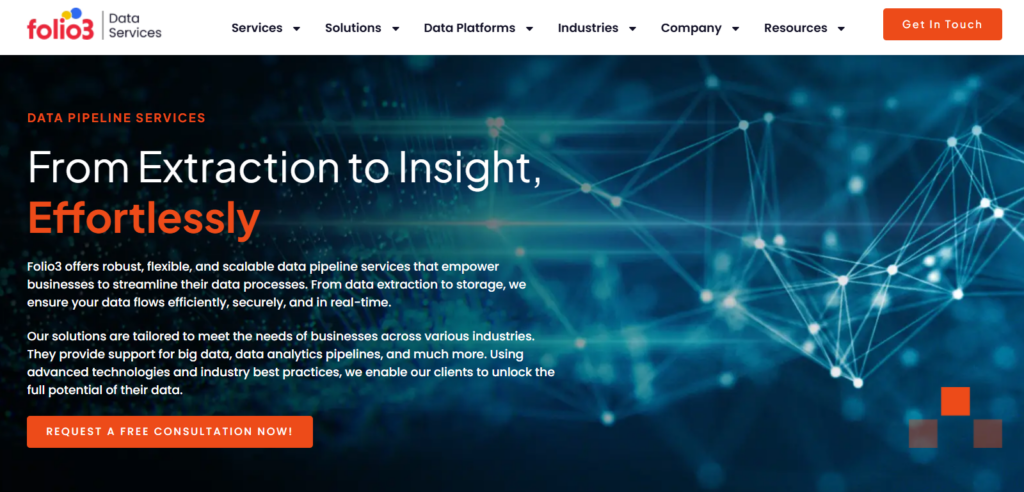
Folio3 Data delivers managed data engineering services for robust pipeline architecture—from ingestion design and advanced transformations to modern warehousing (Snowflake, Databricks, BigQuery), analytics acceleration, and ongoing operations. Our certified cloud specialists combine platform expertise with a consultative model to craft fit-to-purpose architectures that scale with your business. Engagements flex from outcome-based projects to retainers, with clear SLAs and governance baked into delivery.
Typical outcomes include consolidating siloed plant data for predictive maintenance in manufacturing, streamlining golden record management in financial services, and accelerating population health analytics in healthcare through standardized pipelines and lineage tracking. Explore our data engineering services and pipeline approach or see how our big data pipeline work translates into faster time-to-insight and measurable business value.
2. Bright Data: Scalable Web Data Collection and Proxy Services
Bright Data specializes in enterprise-grade, managed web-data pipelines with AI-assisted extraction, quality controls, and flexible delivery via API, no-code, or fully managed services. It supports 190+ ready datasets and output formats including JSON, CSV, and webhooks, making it fast to integrate into analytics or MDM workflows. Many teams deploy Bright Data as part of a larger big data pipeline to streamline ingestion, transformation, and downstream insights. Compliance and trust signals include GDPR and CCPA alignment, ISO 27001, SOC 2, and SLA-backed delivery, with transparent pricing such as API from $1.50 per 1,000 results and managed services starting around $2,500/month, as noted in its DaaS overview. Best for teams needing dependable external data ingestion at scale with strong governance and delivery assurances.
3. Zyte: Complex Managed Web Scraping for Dynamic Sites
Zyte excels when data extraction requires advanced engineering—dynamic, JavaScript-heavy sites; anti-bot evasion; and domain-specific crawlers. The company’s innovation in proxy management, browser rendering, and the Scrapy framework—paired with dedicated teams (100+ specialists)—supports bespoke workflows from capture through validation and integration. Enterprises often apply data engineering best practices when integrating Zyte’s outputs into downstream analytics, CRM, or risk systems to ensure quality, scalability, and maintainability.
4. Apify: Marketplace and Actor-Based Managed Scraping Platform
Apify’s marketplace and actor-based execution model make it easy to get started quickly. An “actor” is a reusable cloud script that performs a complete web-data or transformation task at scale. With 5,000+ prebuilt scrapers and high user satisfaction (G2 rating 4.7/5 across 200+ reviews), Apify enables rapid pilots for e-commerce monitoring, job board insights, and media tracking, while allowing custom actors as needs grow. It’s ideal when time-to-value and low operational overhead are paramount.
5. Grepsr: Quality-Focused Data Collection with Workflow Automation
Grepsr blends automation with rigorous quality assurance—automated extraction plus manual validation—to deliver mission-critical data feeds with high accuracy. It’s suited to compliance-driven finance, product catalog monitoring, and manufacturing supply chain intelligence where uptime, SLAs, and multi-tier QA are essential. Grepsr’s operational tooling supports ongoing schedules, versioning, and clean delivery into lakes, warehouses, or APIs. Many enterprises pair Grepsr’s capabilities with data integration consulting to ensure smooth ingestion, mapping, and validation across complex systems.
6. ScrapeHero: White-Glove Managed Data Collection and Integration
ScrapeHero operates as a white-glove partner for end-to-end web-data initiatives—from scoping and schema design to AI/ML-enhanced enrichment and real-time system integration. Enterprises use ScrapeHero for hands-off automation where delivery must align with internal data models and alerting, such as retail inventory tracking, financial signal discovery, and competitive benchmarking. The emphasis is on tailored execution and seamless fit into your data estate.
7. Dun & Bradstreet: Enterprise Data-as-a-Service for Master Data Management
Dun & Bradstreet is a leader in commercial, firmographic, and risk data, with the D&B Data Cloud covering 600M+ entities and extensive hierarchies. D&B’s Master Data-as-a-Service and APIs help create and maintain golden records across CRM and ERP. Data-as-a-Service delivers curated datasets or insights on demand (via API or bulk), streamlining onboarding, credit checks, compliance, and enrichment for analytics and operational processes. Its breadth and lineage make it a cornerstone for MDM and governance initiatives, particularly for organizations integrating Snowflake data engineering workflows to unify large-scale enterprise data.
8. Integrate.io: Low-Code ETL/ELT Platform for Pipeline Automation
Integrate.io enables low-code ETL/ELT with visual designers, backfills, and prebuilt connectors, reducing engineering overhead for complex integrations across SaaS apps and databases. It supports modern warehouse destinations like Snowflake and BigQuery, and usage-based pricing often starts near $15,000/year, according to an industry tools guide. Common use cases include consolidating enterprise applications, orchestrating batch refreshes, harmonizing schemas for analytics and data science, and building data pipeline services for livestock feed management to streamline farm operations and monitor animal nutrition more effectively.
9. Talend: Enterprise Data Integration and Transformation Tooling
Talend provides robust enterprise integration with strong data quality management, governance, lineage, and metadata-driven design. It excels in durable transformation pipelines that must evolve with regulatory requirements and global scale—think financial reconciliations, omnichannel retail analytics, and regulatory reporting. Talend’s strength lies in making transformations repeatable, auditable, and production-grade, making it a reliable choice for organizations building modern data platforms that unify diverse sources and ensure consistent, governed pipelines.
10. Cloud Trios (AWS, GCP, Azure): Scalable Cloud Infrastructure and Managed Services
AWS, Google Cloud, and Microsoft Azure are the backbone of cloud-native pipelines—offering resilient storage, elastic compute, managed orchestration, and serverless services. AWS delivers the broadest global footprint (over 115 availability zones), GCP is known for analytics and ML leadership, and Azure integrates deeply with enterprise Microsoft ecosystems, as detailed in a recent comparison. Cloud-native refers to systems designed to run, scale, and update on public clouds using managed services and APIs, enabling high availability, compliance alignment, and rapid iteration.
Frequently Asked Questions
What are the essential components of a robust data pipeline architecture?
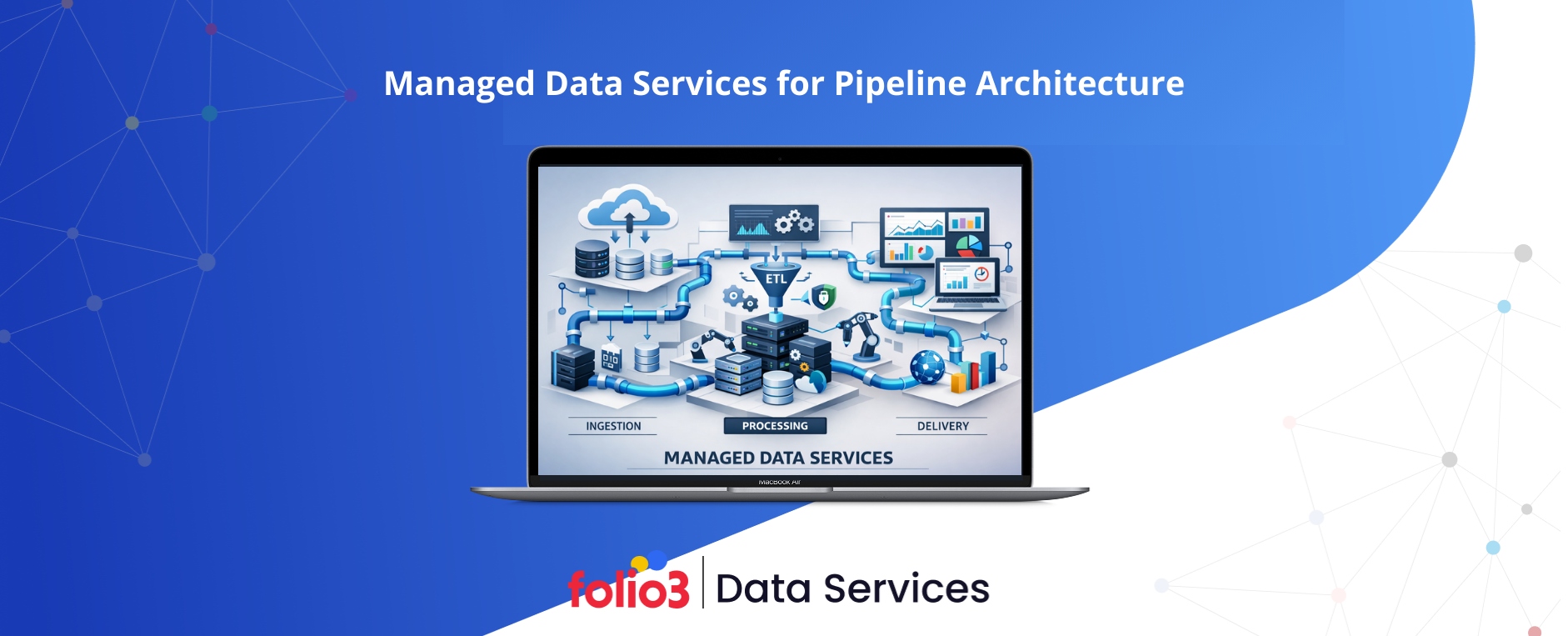
Key components include data sources, extraction/ingestion, transformation, storage (data warehouses or lakes), orchestration for scheduling, and monitoring with lineage and quality checks.
How do managed data services improve scalability and reliability in pipelines?
They provide automatic scaling, proactive monitoring, and failure recovery, maintaining high uptime and performance without heavy in-house operations.
What is the difference between batch and real-time data pipelines?
Batch processes data on schedules for reporting and analytics; real-time streams events for immediate insights like live dashboards and IoT analytics.
How should enterprises choose the right managed data service for their pipeline needs?
Assess data volumes, integration complexity, compliance and residency requirements, SLAs, and support to align services with architecture and business outcomes.
What best practices ensure data governance and security within managed pipelines?
Apply role-based access, lineage and metadata tracking, routine data quality validation, encrypt data in transit and at rest, and align with GDPR or SOC 2.
Conclusion
In 2026, robust data pipeline architecture is essential for enterprises seeking actionable insights, operational efficiency, and AI-ready analytics. Choosing the right managed data service—whether for web-data collection, ETL/ELT, DaaS, or cloud infrastructure—depends on your data domain, latency needs, governance requirements, and cost strategy. The leading providers outlined here offer a mix of scalability, automation, and compliance, helping organizations unify siloed data, accelerate time-to-insight, and reduce operational overhead while maintaining trust and quality across pipelines.
Folio3 Data Services stands out as a full-spectrum partner for managed data engineering and pipeline solutions. By combining certified expertise in Snowflake, Databricks, and BigQuery with consultative architecture design, Folio3 builds end-to-end pipelines that scale reliably across industries. From ingestion and transformation to analytics acceleration and ongoing operations, Folio3 ensures governed, high-performance data flows that deliver measurable business value—helping organizations turn complex, multi-source data into timely, actionable intelligence.